
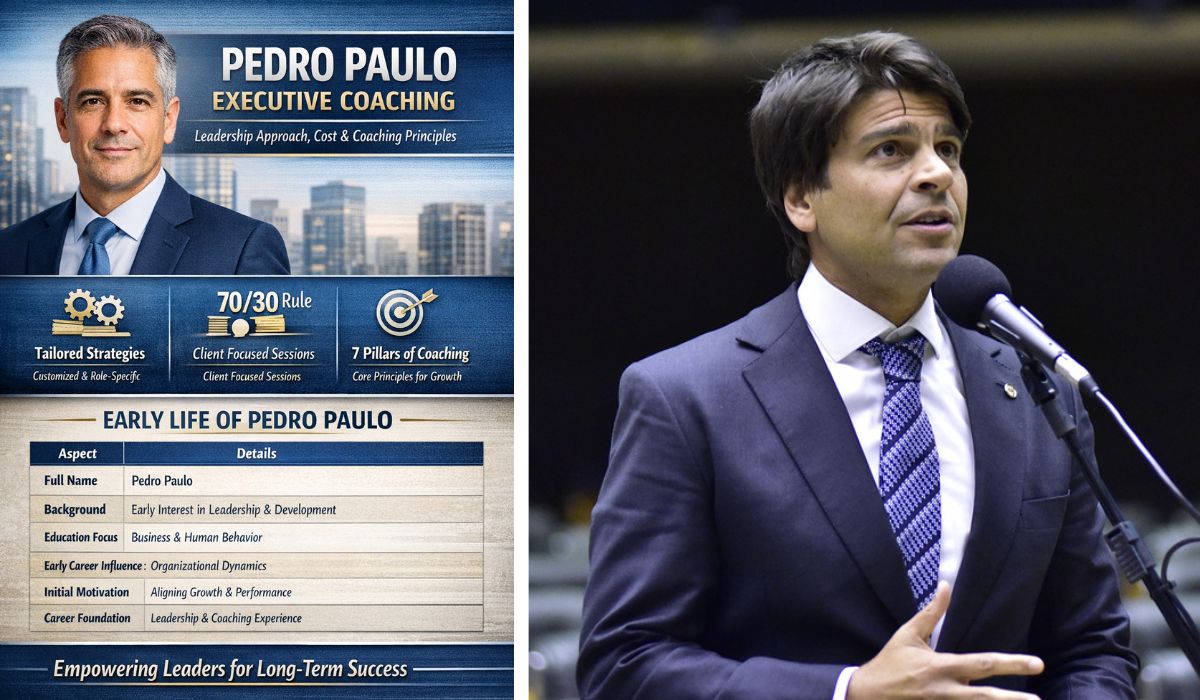

Early Life of Pedro Paulo
| Aspect | Details |
|---|---|
| Full Name | Pedro Paulo |
| Background | Developed an early interest in leadership, communication, and personal development |
| Education Focus | Business, leadership development, and human behavior |
| Early Career Influence | Exposure to organizational dynamics and executive decision-making |
| Initial Motivation | Helping leaders align personal growth with professional performance |
| Career Foundation | Built experience through leadership roles and professional coaching practice |
What is Pedro Paulo’s Coaching Approach?
Pedro Paulo’s coaching approach centers on practical leadership transformation grounded in self-awareness, strategic clarity, and measurable outcomes. Rather than relying on generic motivational frameworks, he works closely with executives to identify individual leadership challenges, behavioral patterns, and decision-making gaps that affect performance. His method blends reflective coaching conversations with actionable strategies, enabling leaders to align personal values with organizational goals. By focusing on accountability, emotional intelligence, and real-world application, Pedro Paulo helps executives develop sustainable leadership habits that drive long-term growth for both the individual and the organization.
How Much Should I Pay for Executive Coaching?
The cost of executive coaching varies widely depending on the coach’s experience, specialization, and the scope of engagement. In general, executive coaching is positioned as a premium professional service, with fees reflecting the depth of personalized support, strategic insight, and confidentiality involved. Pricing is often structured as monthly retainers or multi-session packages rather than one-time meetings, allowing for sustained development and measurable progress. While the upfront investment may seem significant, many executives evaluate the cost based on long-term returns such as improved leadership effectiveness, better decision-making, and stronger organizational performance rather than the price alone.
What Is the 70/30 Rule in Coaching?
The 70/30 rule in coaching refers to a balanced interaction model where the client does most of the thinking and speaking, while the coach primarily guides the process. In this approach, roughly 70 percent of the session is driven by the client’s reflections, insights, and problem-solving, and about 30 percent comes from the coach’s questions, feedback, and structure. The purpose is to encourage ownership, self-discovery, and deeper awareness rather than dependence on advice. By allowing clients to articulate their own challenges and solutions, the 70/30 rule supports lasting behavioral change and stronger personal accountability.
How Does Pedro Paulo Tailor Coaching?
Pedro Paulo tailors his coaching by adapting each engagement to the executive’s role, industry context, and personal leadership objectives. He begins by understanding the client’s responsibilities, organizational pressures, and communication style, then designs coaching sessions that address those specific realities. Rather than following a fixed framework, he adjusts techniques, pacing, and focus areas based on ongoing progress and feedback. This customized approach ensures that coaching remains relevant, practical, and directly connected to the executive’s day-to-day decisions and long-term professional goals.
What Are the 7 Pillars of Coaching?
The seven pillars of coaching represent core principles that support effective and meaningful development. These pillars commonly include trust, active listening, powerful questioning, clarity of goals, accountability, self-awareness, and continuous growth. Together, they create a structured yet flexible foundation for coaching relationships. Trust establishes openness, while listening and questioning deepen understanding. Clear goals and accountability keep progress on track, and self-awareness encourages lasting behavioral change. Continuous growth ensures that coaching remains forward-focused, helping individuals apply insights beyond individual sessions.
Conclusion
Pedro Paulo executive coaching is built on personalization, strategic insight, and measurable leadership growth. Through a client-centered coaching approach, principles such as the 70/30 rule, and a strong foundation rooted in the core pillars of coaching, his methodology supports sustainable development rather than short-term motivation. By tailoring each engagement to the executive’s role, challenges, and goals, Pedro Paulo helps leaders improve self-awareness, decision-making, and accountability. Overall, this coaching framework positions executive coaching as a long-term investment in leadership effectiveness and organizational success.