
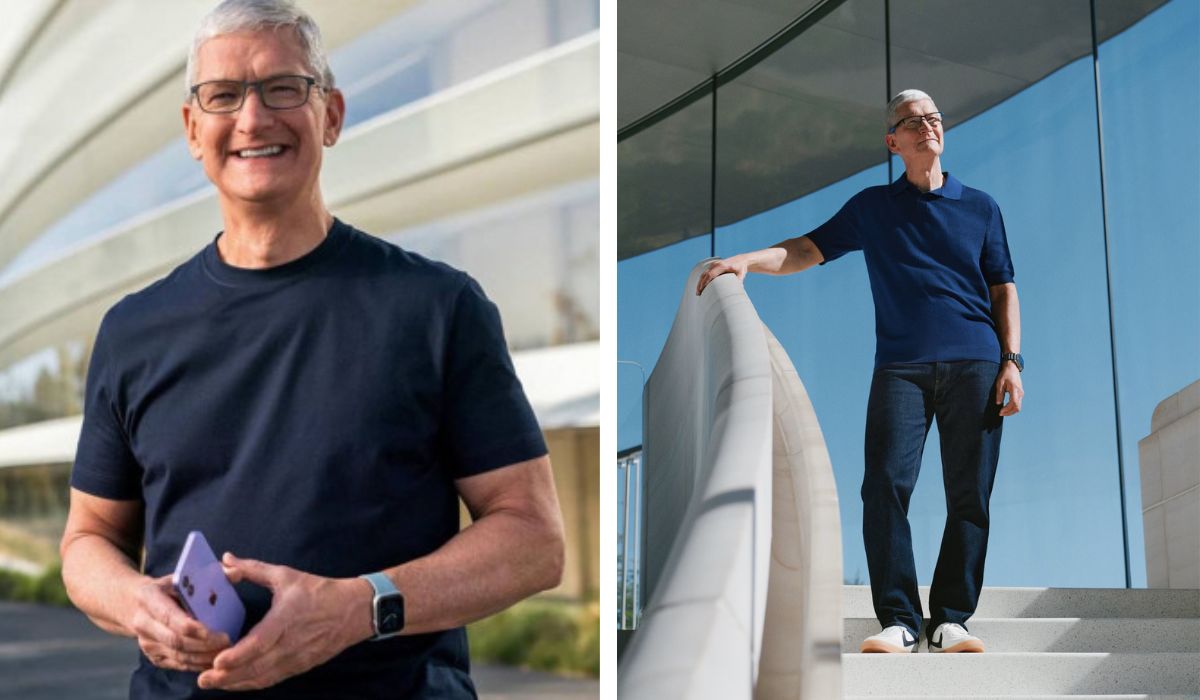

Early Life of Tim Cook
| Detail | Information |
|---|---|
| Full Name | Tim Cook |
| Date of Birth | November 1, 1960 |
| Birthplace | Mobile, Alabama, United States |
| Hometown | Robertsdale, Alabama |
| Father’s Name | Donald Cook (Shipyard worker) |
| Mother’s Name | Geraldine Cook (Pharmacy employee) |
| Education (Undergraduate) | Auburn University – B.S. in Industrial Engineering |
| Graduate Education | Duke University – MBA from Fuqua School of Business |
| Early Career | Worked at IBM for over a decade in operations and supply chain management |
The financial success of Tim Cook, the long-time chief executive of Apple Inc., represents one of the most remarkable executive wealth stories in modern technology. As the leader who succeeded Steve Jobs, Cook transformed the company into one of the most valuable corporations in history while steadily building his own fortune through salary, bonuses, and stock awards.
Today, Tim Cook’s net worth is widely estimated at around $2 billion, a figure accumulated primarily through Apple stock compensation and long-term executive incentives rather than founding equity. Unlike many tech billionaires, Cook did not start Apple; instead, he earned his wealth through leadership performance and compensation structures tied directly to the company’s growth.
In this comprehensive guide, we examine Tim Cook’s net worth, salary structure, stock holdings, career milestones, and how his financial success reflects Apple’s extraordinary rise.
The Rise of Tim Cook: Early Career and Professional Foundation
Before leading Apple, Tim Cook built a strong reputation as a supply chain strategist and operational expert.
Cook was born on November 1, 1960, in Mobile, Alabama, and raised in the nearby town of Robertsdale. His upbringing emphasized discipline, education, and hard work. These values would later define his management philosophy.
Cook attended Auburn University, where he earned a Bachelor of Science in Industrial Engineering. He later completed an MBA from Duke University’s Fuqua School of Business, graduating as a Fuqua Scholar.
Before joining Apple, Cook worked in several prominent technology companies:
- IBM – Managed manufacturing and distribution operations for over a decade
- Compaq – Served as Vice President of Corporate Materials
- Intelligent Electronics – Held leadership roles in supply chain management
These roles helped Cook develop expertise in logistics, operational efficiency, and global manufacturing, skills that would eventually reshape Apple’s production model.
Joining Apple: The Turning Point in Tim Cook’s Wealth
Tim Cook joined Apple in 1998, during a difficult period for the company. At the time, Apple was struggling financially and had recently brought back Steve Jobs as interim CEO.
Cook initially served as Senior Vice President for Worldwide Operations, where he implemented transformative supply chain strategies:
- Reduced Apple’s inventory from months to days
- Shifted manufacturing to outsourced partners
- Improved global distribution efficiency
These operational improvements significantly boosted Apple’s profitability and product delivery speed, laying the foundation for future growth.
Cook’s success quickly elevated him through the company’s leadership ranks.
How Did Tim Cook Get CEO of Apple?
Tim Cook became the chief executive of Apple Inc. after years of proving himself as one of the company’s most trusted leaders. He joined Apple in 1998 when the business was still recovering from financial struggles. As the head of worldwide operations, Cook quickly gained recognition for transforming Apple’s supply chain, reducing inventory costs, and improving manufacturing efficiency. His ability to streamline production and deliver products globally played a major role in Apple’s rapid growth during the 2000s.
Over time, Cook became one of the closest strategic partners of Steve Jobs. He frequently served as acting CEO when Jobs took medical leave, demonstrating strong leadership and deep understanding of the company’s operations. Because of his consistent performance and reliability, Apple’s board viewed Cook as the natural successor. In August 2011, after Jobs officially stepped down due to health concerns, the board appointed Tim Cook as Apple’s CEO. His promotion marked the continuation of Apple’s leadership transition, placing a seasoned operations expert at the helm of one of the world’s most influential technology companies.
What Is the Salary of the CEO of Apple?
The CEO of Apple Inc., currently Tim Cook, receives a compensation package that includes a base salary, performance bonuses, and stock-based incentives. The base salary of Apple’s CEO is about $3 million per year, but the total annual compensation can be much higher depending on company performance and stock awards. In many years, Cook’s full pay package has exceeded $40 million to $90 million, largely because Apple grants restricted stock units that vest over time.
These stock awards are designed to reward long-term leadership and tie executive earnings directly to Apple’s financial success and shareholder value. As a result, while the base salary remains relatively fixed, the CEO’s total income fluctuates significantly based on the company’s performance and the value of Apple shares.
Apple Stock Holdings and Wealth Growth
Unlike many tech founders, Cook did not receive a massive equity stake at the company’s creation. Instead, Apple awarded him stock units as part of long-term executive incentives.
These restricted stock units (RSUs) vest gradually based on performance and tenure.
Over the years, Cook has:
- Received multiple large stock grants
- Sold portions of vested shares
- Retained a significant stake in Apple
Even a relatively small percentage of Apple stock can be extremely valuable because Apple is among the world’s most valuable companies.
As Apple’s valuation surged past $3 trillion at its peak, Cook’s holdings became worth hundreds of millions of dollars.
Key Leadership Achievements That Increased His Net Worth
Tim Cook’s leadership produced several milestones that contributed to Apple’s massive financial expansion.
1. Apple’s Market Value Explosion
When Cook became CEO in 2011, Apple was worth around $350 billion.
Today, the company has frequently exceeded $2 trillion to $3 trillion in valuation, creating enormous shareholder wealth.
2. Services Revenue Expansion
Cook significantly expanded Apple’s services ecosystem:
- Apple Music
- Apple Pay
- Apple TV+
- Apple Arcade
- iCloud subscriptions
These recurring revenue streams now generate tens of billions annually.
3. Global Supply Chain Mastery
Cook’s expertise in logistics allowed Apple to maintain efficient manufacturing at enormous scale, ensuring high margins even as production increased.
4. Privacy and Brand Reputation
Cook also positioned Apple as a privacy-focused technology company, strengthening its global brand reputation and consumer trust.
Tim Cook Net Worth in Perspective
Although Cook is a billionaire, his wealth remains relatively modest compared with many tech founders.
For example:
| Tech Leader | Estimated Net Worth |
|---|---|
| Elon Musk | $200B+ |
| Jeff Bezos | $170B+ |
| Mark Zuckerberg | $100B+ |
| Tim Cook | ~$2B |
The reason is simple: Cook earned his fortune through executive compensation rather than founder equity.
Despite this difference, Cook’s financial success reflects one of the most impressive corporate leadership careers in modern technology.
Conclusion
Tim Cook’s journey from a small-town Alabama upbringing to leading the world’s most valuable technology company illustrates the power of strategic leadership, operational expertise, and long-term vision.
With an estimated net worth of around $2 billion, Cook stands as one of the most successful professional executives in business history. His wealth grew alongside Apple’s unprecedented expansion, driven by disciplined management, innovative product ecosystems, and strong global demand.
As Apple continues to dominate the technology landscape, Tim Cook’s influence on the company—and the wealth he has built through its success—remains a defining chapter in the evolution of modern Silicon Valley leadership.
