
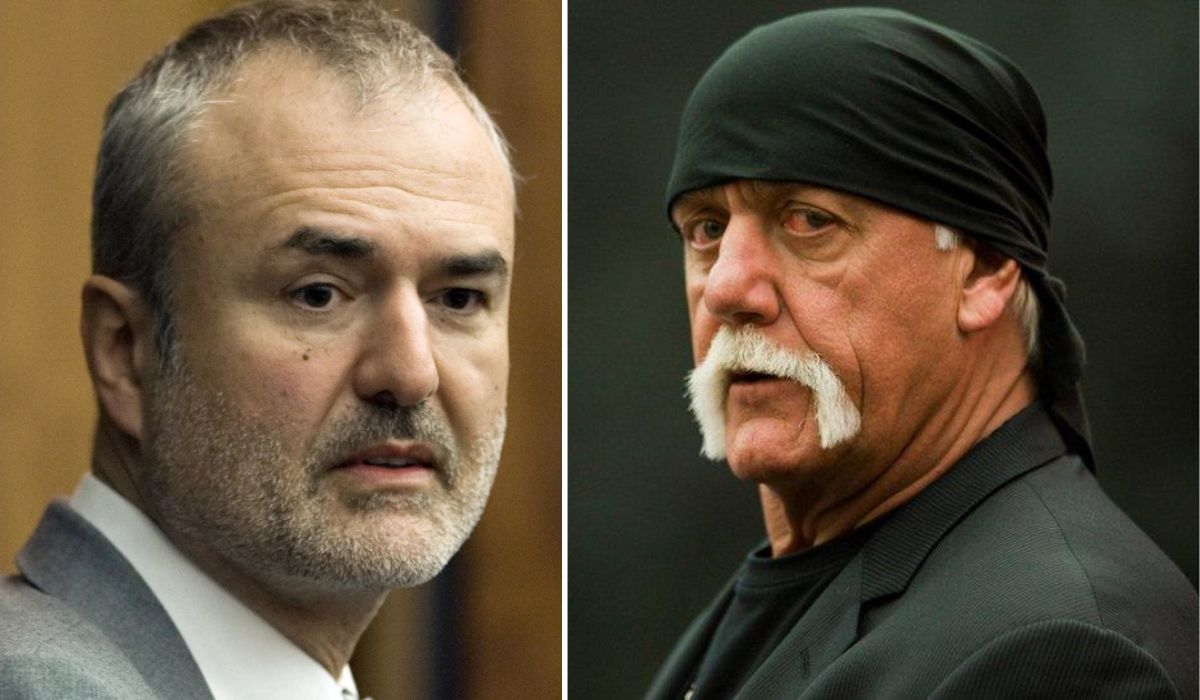

The fall of Gawker Media remains one of the most dramatic stories in the history of modern journalism — a tale of arrogance, ethics, celebrity power, and the limits of press freedom. At the center of this explosive saga stood Hulk Hogan, the legendary wrestler, and Nick Denton, the British journalist-turned-media mogul who built a digital empire on scandal and controversy. What began as a shocking lawsuit over privacy ended with the complete destruction of one of the most influential online media brands of the early 21st century.
The Rise of Gawker Media: A Digital Empire Built on Controversy
In the early 2000s, Nick Denton founded Gawker Media, a revolutionary network of blogs that changed how the world consumed celebrity gossip and tech news. Sites like Gizmodo, Jezebel, Deadspin, and Kotaku quickly gained traction for their raw, unfiltered voices and unapologetic attitude toward tabloid-style journalism.
At its peak, Gawker Media was valued at over $400 million, attracting millions of readers and wielding immense influence across digital culture. Its articles didn’t just report the news — they shaped it. Denton and his writers prided themselves on “truth-telling” without boundaries, taking aim at powerful figures in entertainment, tech, and politics.
But that same daring spirit — the willingness to expose anyone, no matter how famous — would eventually lead to Gawker’s demise.
The Scandal: Hulk Hogan’s Private Life Exposed
In 2012, Gawker published a clip from a sex tape featuring professional wrestler Terry Bollea, better known to the world as Hulk Hogan, and Heather Clem, the wife of Hogan’s close friend Bubba the Love Sponge Clem.
The post, which included an explicit video excerpt and commentary, went viral immediately. Hogan demanded its removal, citing a violation of privacy. Gawker refused, arguing that the footage was a matter of public interest due to Hogan’s celebrity status and history of public commentary about his sex life.
What followed was a legal war that would shake the foundations of media law, privacy rights, and the financial stability of online journalism.
The Lawsuit That Shook the Media World
Hulk Hogan filed a lawsuit against Gawker Media, Nick Denton, and editor A.J. Daulerio, seeking damages for invasion of privacy, emotional distress, and violation of his rights. The case went to trial in 2016 in Florida, and the jury’s verdict would become one of the most shocking in media history.
The court sided with Hogan, awarding him $140 million in damages — a decision that effectively bankrupted Gawker Media overnight. Denton had built his empire on the idea that “everything is fair game,” but the jury’s decision sent a resounding message: there are limits to free speech when it crosses into personal violation.
Peter Thiel’s Secret Revenge: The Billionaire Behind the Curtain
As the dust settled, a new twist emerged — one that transformed the story from a legal drama into a tale of revenge and power.
It was revealed that Peter Thiel, the billionaire co-founder of PayPal and an early investor in Facebook, had secretly financed Hogan’s lawsuit. Thiel had been outed as gay by Gawker years earlier in a 2007 article, and this was his chance to exact silent vengeance on the media company that humiliated him.
With Thiel’s financial backing, Hogan’s lawsuit gained resources far beyond his own means, turning it into a strategic war of attrition that Gawker simply couldn’t survive. The revelation sparked intense debates about whether Thiel’s actions were a dangerous precedent — a billionaire using his wealth to silence a media outlet — or poetic justice for a reckless publisher.
The Bankruptcy and Sale of Gawker Media
After the verdict, Gawker Media filed for Chapter 11 bankruptcy protection. Its assets were sold to Univision for approximately $135 million, marking the end of an era. Nick Denton personally filed for bankruptcy, and Gawker.com itself was shut down in August 2016.
Though Gawker’s other properties, such as Gizmodo and Jezebel, continued under new ownership, the Gawker brand was irreparably tainted. In 2022, an attempt to relaunch Gawker under new management failed once again, proving that the shadow of its past was too heavy to escape.
The empire that once defined digital media audacity had been reduced to digital rubble, undone by a single post and a billionaire’s vendetta.
Hulk Hogan’s Victory: More Than Just Money
For Hulk Hogan, the case was not merely about the massive financial settlement. It was about reclaiming dignity and privacy in an era where celebrity culture often strips away both. Hogan publicly stated that the lawsuit wasn’t about revenge, but about standing up for everyone’s right to privacy — even those who live their lives in the spotlight.
After years of ridicule and personal turmoil, Hogan’s courtroom triumph restored his public image. It became a symbol of resilience and redemption, showing that even the most powerful media institutions could be held accountable.
The Ethical Fallout: Journalism vs. Privacy
The Hogan vs. Gawker case reignited global debates about the limits of journalistic freedom. Was Gawker exercising free speech or exploiting a human being’s private pain for clicks?
Critics argued that the publication of the tape crossed every ethical boundary imaginable, while defenders claimed that the ruling endangered press freedom by allowing wealthy individuals to bankrupt news organizations through litigation.
The case became a landmark precedent for digital journalism, influencing how media outlets handle private material and celebrity coverage to this day. It also highlighted the fragile balance between public interest and personal privacy — a balance that continues to evolve with every viral story.
Nick Denton’s Legacy: Visionary or Villain?
Nick Denton’s role in the Gawker saga remains deeply controversial. To some, he was a visionary disruptor who democratized information and gave the public access to truths hidden by powerful elites. To others, he was a reckless provocateur who destroyed lives for profit.
In later interviews, Denton expressed regret for publishing the Hogan tape, admitting that it crossed a line even by Gawker’s own daring standards. Yet, he also defended his broader philosophy — that journalism must be fearless, even if it occasionally goes too far.
Denton’s fall from grace marked the end of a digital media era defined by clickbait, shock value, and radical transparency. His story serves as a cautionary tale for journalists navigating the blurred line between freedom of expression and ethical responsibility.
The Lasting Impact on Media and Free Speech
Nearly a decade later, the repercussions of Hogan vs. Gawker are still felt across the media landscape. Newsrooms have become more cautious about publishing explicit or invasive content, while tech platforms and digital publishers now face greater scrutiny over privacy and consent.
The case reshaped how journalists think about accountability and compassion in storytelling. It underscored that freedom of the press is not a license for invasion of privacy, and that journalistic power must be balanced with empathy and restraint.
In the end, Hulk Hogan didn’t just win a lawsuit — he delivered a body slam to an entire media philosophy, one that prioritized exposure over ethics.
Conclusion: The Fall of a Media Giant and the Rise of Accountability
The battle between Hulk Hogan and Gawker will forever be remembered as a defining clash between celebrity privacy and media freedom. It was a modern-day morality tale where power, ego, and principle collided — leaving behind a legacy that continues to shape journalism, law, and digital culture.
From a $400 million empire to bankruptcy oblivion, the story of Gawker’s fall serves as a stark reminder that in the age of information, integrity remains the most valuable currency.