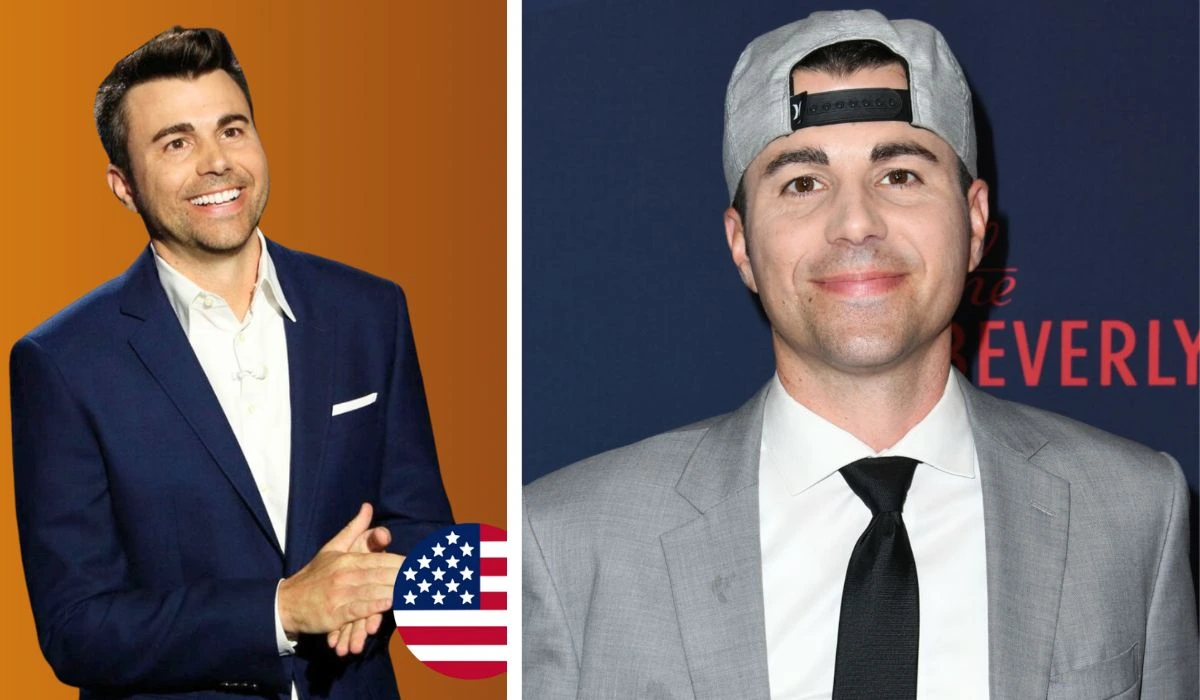

Quick Facts
| Field | Details |
| Full Name | Mark B. Rober |
| Born | 1980 or 1981 (exact date not publicly confirmed) |
| Place of Birth | Orange County, California, USA |
| Raised | Brea, California |
| Age | Approximately 44–45 years old (2026) |
| Nationality | American |
| Religion | Member of The Church of Jesus Christ of Latter-day Saints |
| Education | Brea Olinda High School (graduated 1998); Brigham Young University — B.Sc. Mechanical Engineering (2004); University of Southern California — M.Sc. Mechanical Engineering |
| NASA Career | Jet Propulsion Laboratory (JPL), 2004–2013 — 9 years, including 7 years on the Mars Curiosity Rover |
| Apple Career | Apple Special Projects Group, 4 years — authored patents on VR in self-driving cars |
| YouTube Channel | Mark Rober — 72+ million subscribers; 15 billion+ lifetime views |
| YouTube Founded | 2011 |
| Biggest Videos | Glitter Bomb (2018, 25M views in one day); Halloween costume videos |
| Companies Founded | Digital Dudz (2011, sold 2013); CrunchLabs (2022) |
| Philanthropic Projects | #TeamTrees (2019, $23.6M raised); #TeamSeas (2021, $30M+ raised); #TeamWater (2025, $40M+ raised) |
| Divorced | Yes (married previously; divorce confirmed September 2024) |
| Children | One son (autism diagnosis publicly disclosed) |
| Netflix Show | Hosting a Netflix science competition (2026, produced with Jimmy Kimmel) |
| Net Worth | Estimated $25 million – $45 million (2026) |
Who Is Mark Rober?
Mark B. Rober is an American engineer, YouTuber, inventor, entrepreneur, and educator whose career has followed one of the most unlikely and instructive trajectories in the contemporary creator economy: from studying mechanical engineering at Brigham Young University to spending nine years at NASA’s Jet Propulsion Laboratory working on the Mars Curiosity Rover, to building a YouTube channel with 72 million subscribers that makes science genuinely entertaining for audiences of all ages, to founding CrunchLabs — an educational technology company that has become the most significant single driver of his growing fortune.
In 2026, Mark Rober is the most successful science communicator on YouTube and one of the most financially consequential individual creators operating at the intersection of engineering, education, and digital media. His net worth is estimated between $25 million and $45 million depending on the methodology used — a range that reflects both the documented public-facing income from YouTube and sponsorships, and the harder-to-value privately held equity in CrunchLabs.
He built it by making science fun. That sounds simple. It is not.
Early Life and Background
Mark Rober was born in either 1980 or 1981 — he has not publicly confirmed his exact birth date — in Orange County, California. He grew up in Brea, a city in the northern part of Orange County, as the youngest of three siblings.
His interest in engineering and problem-solving was evident from childhood. He has described making a pair of goggles as a young child designed to prevent eye irritation while cutting onions — an early example of the engineer’s instinct to identify a problem and build a solution, rather than simply accept the inconvenience.
He is a member of The Church of Jesus Christ of Latter-day Saints, a faith background that has occasionally featured in his content and that informs his family-friendly approach to science communication. He attended Brea Olinda High School, graduating in 1998.
Education
Mark Rober’s formal education is the foundation on which everything that followed was built — not merely as credential but as genuine competence.
He attended Brigham Young University in Provo, Utah, majoring in mechanical engineering. He graduated in 2004 with a Bachelor of Science. He subsequently earned a Master of Science in Mechanical Engineering from the University of Southern California — giving him graduate-level engineering credentials that distinguish his science content from that of most YouTube creators.
His educational background is not decorative. When he explains the physics of a projectile, the mechanics of a trebuchet, or the engineering of a glitter bomb, he is drawing on the same knowledge base that enabled him to contribute to space exploration. That credibility — earned through rigorous academic training and demonstrated in NASA-level professional work — is one of the primary reasons his audience trusts his content.
Career
NASA Jet Propulsion Laboratory (2004–2013)
After completing his engineering degrees, Mark joined NASA’s Jet Propulsion Laboratory in Pasadena, California, in 2004 — the same year he graduated from BYU. He spent nine years at JPL, seven of which were dedicated to the Mars Curiosity Rover: one of the most sophisticated robotic exploration systems ever built and the centrepiece of NASA’s Mars Science Laboratory mission.
His contributions spanned multiple JPL missions including Advanced Modeling Technology (AMT), GRAIL, and SMAP, as well as Mars Science Laboratory. Beyond the hardware work, he played a significant role in creating “JPL Wired” — a comprehensive internal wiki designed to capture institutional knowledge across the organisation. He co-published a peer-reviewed paper on the application of wiki technology in high-tech organisations, titled “Capturing Knowledge via an ‘Intrapedia’: A Case Study.”
It was during his NASA years that he began making YouTube videos — initially as a creative side project rather than a career aspiration. His first video, uploaded in October 2011, featured a custom Halloween costume using iPads that created the illusion of a transparent body. It went viral, accumulating over a million views in a single day.
Apple Special Projects Group (2013–2015)
After nine years at NASA, Mark made a significant career transition: he joined Apple’s Special Projects Group as a product designer. The group works on exploratory, advanced technology projects — the kind that may not reach market for years, if ever. During his four years at Apple, he authored patents involving virtual reality applications in self-driving cars, reflecting his engineering range beyond aerospace.
It was during his Apple years that his YouTube channel continued to grow — and the tension between his engineering career and his creator career became increasingly unresolvable. He made the decision to leave Apple and pursue YouTube full-time.
YouTube Career (2015–Present)
Mark Rober’s YouTube channel has evolved from a side project into one of the most-subscribed science and education channels on the platform.
The Glitter Bomb (2018) — the video that redefined his reach. After repeatedly having packages stolen from his porch, he engineered a decoy package filled with glitter, fart spray, and cameras to document and shame package thieves. The video accumulated 25 million views in a single day, setting a record for the fastest-growing video on the platform at that time. Subsequent annual Glitter Bomb videos have become among his most anticipated content.
Scale and Production — unlike most YouTubers who operate as sole creators or small teams, Mark Rober employs a team of approximately 100 people and produces videos at a per-episode cost that runs into seven figures. This investment in production quality produces content that behaves differently from standard YouTube fare: it is as likely to be recommended by a teacher as discovered through an algorithm.
Philanthropic Scale — three of his most significant projects have been charitable fundraisers:
- #TeamTrees (2019) — co-created with MrBeast; raised $23.6 million for the Arbor Day Foundation for tree-planting worldwide.
- #TeamSeas (2021) — co-created with MrBeast; raised more than $30 million for ocean and beach clean-up.
- #TeamWater (2025) — co-created with MrBeast; raised over $40 million for WaterAid by August 2025.
The ability to raise $40 million from a YouTube audience for water access reflects both the scale of his following and the depth of trust that audience has invested in him — a trust built through years of credible, accurate, entertaining science content.
Netflix (2026) — Mark is set to host a Netflix science competition series in 2026, produced in collaboration with Jimmy Kimmel and CrunchLabs. The Netflix deal represents the most significant expansion of his media presence beyond YouTube.
CrunchLabs (2022–Present)
CrunchLabs is Mark Rober’s educational technology company, founded in 2022. It offers monthly subscription boxes — called CrunchLabs Build Boxes — containing hands-on engineering and building projects for children. Each box is designed around a core engineering concept, and the subscription model creates recurring revenue that is considerably more financially predictable than YouTube advertising.
The company has scaled rapidly since its founding, drawing on Mark’s YouTube audience as a natural acquisition channel and his engineering credentials as a quality signal. In 2025, Google and T-Mobile were among his most prominent brand partners through CrunchLabs’ Space Selfie project.
CrunchLabs is, by most analyst assessments, the most significant single driver of Mark Rober’s current and future net worth — because it represents ownership of a scalable, recurring-revenue business rather than income tied to the fluctuations of YouTube advertising rates or brand sponsorship cycles.
Digital Dudz (2011–2013)
His first company, Digital Dudz, created Halloween costumes that incorporated iPad screens to display animated effects — essentially bringing his viral Halloween costume video to market as a product. The company generated $250,000 in revenue in its first three weeks and expanded to retail outlets including Party City before being sold to the UK spandex company Morphsuits in 2013. The sale was his first liquidity event as an entrepreneur.
Personal Life
Mark Rober was previously married, though details of the marriage and his wife’s identity have been kept largely private, consistent with his general approach to protecting his family from public attention. In September 2024, he revealed on X (formerly Twitter) that he had been divorced for approximately 3.5 years — placing the separation in early 2021 — and that he no longer wears a wedding band in his videos. He has not discussed the relationship’s end in detail.
He has one son. He has publicly disclosed that his son has autism — a disclosure he made in the context of one of his videos about autism, aimed at broadening understanding of the condition among his audience. His son’s name and further details have been kept private.
He is a practising member of The Church of Jesus Christ of Latter-day Saints, which informs his approach to content: consistently family-safe, scientifically rigorous, and free from the controversy-for-engagement approach that drives much of the creator economy.
Mark Rober’s Net Worth in 2026
Mark Rober’s net worth in 2026 is estimated between $25 million and $45 million across credible sources, with Celebrity Net Worth placing the figure at $25 million and other analysts extending the estimate higher when CrunchLabs’ business valuation is included.
The wide range reflects a genuine methodological disagreement about how to value a privately held company like CrunchLabs — an asset that generates recurring subscription revenue at scale but whose equity value is not publicly disclosed.
His income streams include:
YouTube advertising revenue — at 72 million subscribers and 15 billion lifetime views, his channel generates consistent advertising income. Industry estimates suggest $3 million to $6 million annually from YouTube ad revenue alone, though exact figures depend on video frequency and CPM rates.
Brand sponsorships — major brand deals with T-Mobile, Google, Rivian, Disney, and others command significant fees at his audience scale. Sponsorship income from a channel his size typically exceeds YouTube ad revenue.
CrunchLabs subscription revenue — the most scalable component of his income. As a recurring-revenue subscription business at meaningful scale, CrunchLabs’ annual revenue and equity value represent the largest long-term driver of his net worth.
Speaking engagements — his unique combination of NASA engineering credentials and mass-market science communication makes him one of the most sought-after corporate and event speakers in the STEM space, commanding fees of $200,000 or more per engagement.
Netflix deal — terms not publicly disclosed, but a hosting contract for a major Netflix science competition series at his level of recognition typically generates seven-figure income.
Past income — nine years at NASA, four years at Apple, and the Digital Dudz sale provided financial stability before YouTube income became substantial.
Frequently Asked Questions
What is Mark Rober’s net worth in 2026?
Mark Rober’s net worth is estimated between $25 million and $45 million in 2026, depending on how CrunchLabs’ business value is calculated. Celebrity Net Worth places the figure at $25 million.
Did Mark Rober actually work at NASA?
Yes. Mark Rober spent nine years at NASA’s Jet Propulsion Laboratory, seven of which were devoted to work on the Mars Curiosity Rover. He also worked four years at Apple’s Special Projects Group before leaving to pursue YouTube full-time.
How old is Mark Rober?
Mark Rober was born in 1980 or 1981, making him approximately 44 to 45 years old as of 2026. He has not publicly confirmed his exact birth date.
What is CrunchLabs?
CrunchLabs is Mark Rober’s educational technology company, founded in 2022. It offers monthly subscription boxes containing engineering and building projects for children, designed to teach STEM concepts through hands-on experience.
How many subscribers does Mark Rober have?
As of 2026, Mark Rober’s YouTube channel has over 72 million subscribers and has accumulated more than 15 billion lifetime views.
What is Mark Rober’s most viewed video?
His Glitter Bomb video, published in December 2018, accumulated 25 million views in a single day — a platform record at the time. The video documented an elaborate prank on package thieves using a device he engineered himself.
Is Mark Rober married?
He was previously married but revealed in September 2024 that he had been divorced for approximately 3.5 years. He has not remarried.
Does Mark Rober have children?
Yes. He has one son. He has publicly disclosed that his son has autism, sharing this in connection with a video aimed at educating his audience about the condition.
What Netflix show is Mark Rober hosting?
In 2026, Mark Rober is set to host a Netflix science competition series, produced in partnership with Jimmy Kimmel and CrunchLabs.
What charitable projects has Mark Rober led?
He co-created #TeamTrees (2019, $23.6M raised), #TeamSeas (2021, $30M+ raised), and #TeamWater (2025, $40M+ raised with MrBeast), all large-scale collaborative fundraisers with measurable real-world impact.
Summary
Mark Rober’s $25 to $45 million net worth in 2026 was not built by going viral. It was built by going deep — into a NASA engineering career that gave him the knowledge to make science credible, into a YouTube strategy that prioritised quality and trust over frequency and controversy, and into CrunchLabs, a business that converts audience trust into recurring revenue at scale. The trajectory from Mars Curiosity Rover engineer to science YouTuber to STEM education entrepreneur is not one anyone planned. It is the result of someone who consistently followed what he was best at into whatever context offered the largest opportunity to apply it. In 2026, with a Netflix show launching and CrunchLabs continuing to grow, that trajectory shows no sign of reversing.